
“What is Udacity? A Complete Guide to Mastering In-Demand Tech Skills in 2026”
In the rapidly evolving landscape of the 21st-century job market, the ability to learn, unlearn, and relearn has become the ultimate professional superpower. Enter Udacity, a global leader in online education that has carved out a unique niche by focusing specifically on bridging the gap between traditional academia and the immediate, practical demands of the technology industry.
Founded in 2011 by Sebastian Thrun, David Stavens, and Mike Sokolsky, Udacity emerged from a revolutionary experiment at Stanford University. When their “Introduction to Artificial Intelligence” course was opened to the world online, the response was overwhelming: over 160,000 students enrolled, and the results revealed that students from across the globe could outperform even elite university attendees. This epiphany—that talent is everywhere but opportunity is not—became the driving force behind Udacity’s mission to democratize education.
Udacity is a global, industry-aligned online learning platform that has fundamentally redefined professional development by bridging the gap between traditional academic theory and the immediate, practical demands of the technology workforce. Founded in 2011 by Sebastian Thrun, David Stavens, and Mike Sokolsky following a viral Stanford University experiment, the company has evolved into a premier destination for lifelong learners, enterprises, and governments aiming to conquer the digital talent shortage. Unlike standard lecture-based platforms, Udacity’s signature “Nanodegree” programs are built through deep collaborations with technology giants like Google, AWS, Microsoft, and NVIDIA, ensuring that curricula remain at the bleeding edge of industry standards. The platform’s unique “learn-by-doing” pedagogy focuses on production-ready projects that allow students to build professional portfolios, which are then vetted by a network of expert human mentors to verify competency. As of 2026, Udacity has expanded its impact by integrating advanced technical training with formal, accredited degree pathways, including specialized Master’s programs in AI Product Management. By fostering a culture of being “outcome-obsessed,” the platform empowers millions of users worldwide to navigate the complexities of the AI-driven economy, proving that in the modern job market, the most valuable credential is the ability to solve real-world problems.
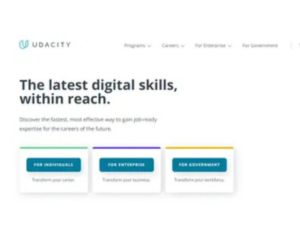
What Sets Udacity Apart? The “Nanodegree” Model
Unlike traditional Massive Open Online Courses (MOOCs) that focus primarily on lecture-based consumption of information, Udacity differentiates itself through its signature Nanodegree programs. These are not just courses; they are career-oriented, project-based educational credentials.
Why the Nanodegree Matters:
1. Industry Collaboration: Udacity partners with technology giants like Google, Microsoft, AWS, and IBM to co-create curricula. This ensures that what you learn is not just academic theory, but the exact technical stack currently required in the workplace.
2. Project-Driven Learning: The core of every program is “doing.” Students must complete real-world projects that are reviewed by human experts, providing a portfolio of work that can be shown to potential employers.
3. Career-Readiness: From résumé support to interview preparation, Udacity aims to ensure graduates are ready to hit the ground running on “Day One” of their new job.
The Core Schools of Knowledge
Udacity organizes its expansive catalog into specialized “Schools,” allowing learners to dive deep into specific career tracks. Whether you are looking to pivot into data science, master cloud computing, or explore the frontiers of artificial intelligence, there is a tailored path.
Major Schools Include:
1. School of Artificial Intelligence: Covering everything from machine learning and deep learning to cutting-edge topics like Agentic AI and Generative AI.
2. School of Data Science: Focused on data engineering, data analysis, and predictive modeling using tools like Python, SQL, and Tableau.
3. School of Programming and Development: Providing foundational and advanced training in web development (Full Stack, Front End), iOS/Android development, and software engineering.
4. School of Business: Bridging the gap between tech and management, offering programs in Digital Marketing, Product Management, and Business Analytics.
5. School of Autonomous Systems: Specialized training in the technologies powering self-driving cars, robotics, and advanced automation.
Who is Udacity For?
Udacity is designed for the lifelong learner who is “outcome-obsessed.” It is particularly effective for:
1. Career Switchers: Individuals looking to move from non-technical fields into high-demand tech roles.
2. Upskillers: Current professionals who need to add modern technical competencies (like AI or Cloud) to their existing skill set to advance in their current companies.
3. Enterprises: Companies and governments partnering with Udacity to conduct large-scale digital transformation by training their workforces on the latest technologies.
The Value of Mentorship and Community
A common hurdle in online learning is the feeling of isolation. Udacity addresses this by incorporating an expert mentor network. When students encounter technical roadblocks, they are not left to scour forums alone. Mentors provide personalized feedback on projects, help debug code, and offer guidance to keep learners on track, ensuring that the “open” nature of the course is balanced with the “support” required for true mastery.
Udacity in the Modern Digital Economy
As of 2026, Udacity remains at the forefront of digital upskilling. With millions of registered users globally, the platform has proven that when education is focused on job-ready skills rather than just theoretical knowledge, the career outcomes for students are significant. Whether through a short, introductory course or a rigorous, months-long Nanodegree, Udacity continues to fulfill its original goal: to be “audacious for the student.”
By shifting the focus from prestigious degrees to demonstrable competency, Udacity has successfully disrupted the traditional educational model, proving that in the future of work, the most important credential is what you can actually build and do.
Strategic Evolution: Udacity in the 2026 AI Economy
The narrative of Udacity has shifted significantly as we progress through 2026. No longer merely a provider of vocational training, Udacity—now operating as a key component of the Accenture ecosystem—has pivoted toward addressing the systemic “AI skills crisis.” As artificial intelligence moves from an experimental phase to an enterprise-wide requirement, the platform has integrated advanced academic rigor with its signature project-based flexibility.
Bridging the Gap to Higher Education
In a bold move that redefines the value of online credentials, Udacity has recently launched accredited degree programs, including a Master of Business Administration (MBA) focused on AI Product Management. By collaborating with institutions like Woolf, Udacity provides a bridge for professionals to earn recognized, portable degrees that are highly valued across the European Union and globally. This evolution addresses a long-standing critique of online learning: that it lacked the institutional “weight” of traditional degrees.

Why the “Skills-First” Hiring Revolution Matters
The job market in 2026 is increasingly characterized by a “skills-first” approach. Employers are shifting away from strict degree prerequisites and are now prioritizing proven skills and competencies.Udacity’s curriculum is explicitly designed to meet this demand by focusing on:
1. Production-Ready Capabilities: Acquiring the skills to develop AI agents, manage intricate systems, and implement cloud-native applications.
2. Contextual Problem Solving: Shifting from “learning syntax” to “solving business objectives.” For instance, rather than just learning Python, a student might be tasked with building a predictive model to reduce customer churn for a retail client.
3. Continuous Re-skilling: As technology cycles shorten, the modularity of Udacity’s programs allows professionals to stack new certifications as the industry demands, rather than needing to commit to years-long educational gaps.
The Role of Human-in-the-Loop Mentorship
Despite the proliferation of AI-assisted learning tools, Udacity’s commitment to human mentorship remains a cornerstone of its efficacy. In 2026, the mentor network provides more than just technical debugging; mentors now act as career coaches who help students navigate the nuances of working in AI-integrated organizations. This human layer is critical for mastering the “soft skills” of the technical world—communication, team orchestration, and ethical AI deployment.
Conclusion :-
As we navigate the complexities of 2026, Udacity stands as more than just an online learning platform; it is a vital architect of the modern workforce. By prioritizing competency over credentials, Udacity has successfully dismantled the barriers between traditional education and the rapidly shifting demands of the tech industry. Through its signature project-based Nanodegree programs and its strategic focus on high-growth fields like Artificial Intelligence, Data Science, and Cloud Computing, the platform has proven that a “skills-first” approach It is the most efficient method to attain career advancement.
The true impact of Udacity lies in its “outcome-obsessed” philosophy. By co-creating curricula with industry titans and providing personalized human mentorship, the platform ensures that learners are not merely consuming information, but are instead building the portfolios and professional confidence necessary to thrive in competitive environments. With its recent expansion into accredited degree pathways—such as the AI-focused MBA—Udacity is setting a new benchmark for how we define higher education in the 21st century.
Ultimately, Udacity empowers individuals to take ownership of their professional narrative. In an era where technological disruption is the only constant, the ability to iterate on one’s own skill set is the most valuable asset a professional can possess. Whether you are aiming for a career pivot, seeking a promotion, or looking to master the next frontier of innovation, Udacity provides the tools, support, and industry-vetted expertise to turn your professional ambitions into tangible reality.
Based on the article, here are 10 key benefits of the Udacity learning model:
1. Industry-Aligned Curriculum: Programs are co-created with global technology leaders (such as Google, AWS, and Microsoft), ensuring that the skills learned are current and directly applicable to the demands of the modern workforce.
2. Project-Based Learning: Instead of purely theoretical study, learners build real-world projects that simulate professional workflows, allowing them to apply new knowledge to practical, business-relevant challenges.
3. Demonstrable Portfolio: By completing industry-vetted projects, students graduate with a tangible portfolio of work that provides concrete evidence of their capabilities to potential employers.
4. Expert Human Mentorship: Learners have access to technical mentors who provide personalized feedback, debug code, and offer guidance, bridging the gap between independent study and classroom support.
5. Career Readiness Integration: Beyond technical skills, programs include career coaching, résumé optimization, and interview preparation to help students transition effectively into new roles.
6. Flexible, Self-Paced Education: Udacity’s structure allows professionals to balance learning with their existing work commitments, providing a modular approach that fits a busy schedule.
7. Specialized Skill Paths: The “School” model (e.g., School of AI, School of Data Science) allows learners to dive deep into high-growth, high-demand technical specializations rather than relying on generalized coursework.
8. Professional Networking: Students gain access to a global community of learners and alumni, fostering collaboration and providing opportunities for peer support and professional growth.
9. Continuous Up-skilling: The platform is designed for lifelong learners, enabling professionals to return and “stack” new certifications as emerging technologies (like Generative AI) evolve.
10. Outcome-Oriented Focus: Udacity prioritizes career outcomes—such as securing a new job or earning a promotion—over passive credential collection, focusing on tangible professional advancement.
Short Description :-
In the rapidly shifting landscape of the 2026 job market, Udacity has established itself as a premier destination for professionals seeking to bridge the gap between academic theory and industry demand. Originally founded as an experiment in open education, the platform has evolved into a powerhouse for career-oriented, project-based upskilling.
At its core, Udacity differentiates itself through its Nanodegree programs, which are co-created with global technology giants like Google and AWS to ensure learners acquire the exact technical competencies currently sought by top employers. By prioritizing a “skills-first” approach, the platform moves beyond traditional lecture-based learning, requiring students to build a portfolio of real-world projects reviewed by human experts.
Whether you are looking to master Artificial Intelligence, Data Science, or Cloud Engineering, Udacity provides a structured pathway to career advancement. With a focus on job readiness, professional mentorship, and a commitment to lifelong learning, the platform empowers individuals to navigate the complexities of the digital economy. For the modern worker, Udacity offers more than just education; it provides a strategic toolkit for remaining competitive, relevant, and capable in an era defined by constant technological disruption.
Meta Description :-
“Discover how Udacity transforms careers through industry-aligned Nanodegrees. Master AI, Data Science, and Cloud skills with project-based learning today.””Ready to level up? Learn why Udacity is the leader in job-ready technical training. Build your portfolio with real-world projects and expert mentorship.””Explore Udacity in 2026: Expert-led Nanodegrees designed to bridge the gap between theory and industry-ready skills. Start your tech career today .”