
HubSpot : The Comprehensive Guide to Expanding Your Business Using a Unified CRM System
In today’s fast-paced digital economy, businesses are constantly searching for ways to streamline operations, nurture customer relationships, and scale efficiently. Whether you are a lean startup or a burgeoning enterprise, managing disconnected tools for email, sales, and customer service often leads to “data silos”—where information is trapped, and growth stalls.
Enter HubSpot, an industry-leading, AI-powered customer platform designed to unify your marketing, sales, service, content, and operations teams under one roof. By acting as a single source of truth, HubSpot helps organizations move away from fragmented systems and toward a cohesive, customer-centric strategy.
HubSpot is a comprehensive, cloud-based CRM platform that serves as an all-in-one ecosystem for marketing, sales, service, content management, and operations, designed to help businesses eliminate data silos and accelerate growth. By providing a “single source of truth,” the platform allows teams to track the entire customer journey from the first touchpoint to final retention, ensuring that every interaction is informed by unified data. At its heart, the system is composed of specialized “Hubs”—such as the Marketing, Sales, Service, and Content Hubs—that offer granular control over specific business functions while maintaining seamless connectivity through a shared database. As businesses scale, they benefit from HubSpot’s sophisticated automation capabilities and the “Breeze” AI-agent ecosystem, which handles repetitive tasks like lead scoring, email nurturing, and data hygiene, effectively reducing the “integration tax” related to the management of various software tools. By prioritizing an inbound philosophy—where customers are attracted through value-driven content rather than disruptive advertising—HubSpot empowers organizations to build lasting, authentic relationships. Whether a company is a lean startup utilizing the free tier or an enterprise organization requiring complex custom reporting and advanced integrations, HubSpot provides the infrastructure to align internal Teams, enhance productivity, and provide a consistently enjoyable customer experience in a progressively competitive digital marketplace.
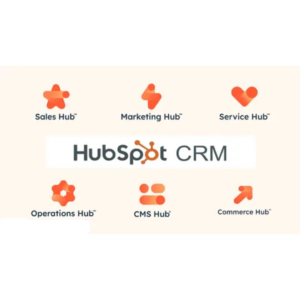
What is HubSpot?
At its core, HubSpot is a cloud-based CRM (Customer Relationship Management) platform. Founded in 2006 by Brian Halligan and Dharmesh Shah, it pioneered the concept of “Inbound Marketing”—a philosophy centered on attracting customers through valuable content and meaningful experiences rather than disruptive advertising.
Over the years, HubSpot has evolved from a simple marketing automation tool into an comprehensive ecosystem. It links all customer interaction points, guaranteeing that when a lead accesses your website, engages with your blog, communicates with a sales representative, or submits a support ticket, every department possesses the complete understanding of that relationship.
The Core “Hubs”: Your Business Powerhouse
HubSpot organizes its extensive feature set into specialized “Hubs,” allowing businesses to adopt the tools they need as they grow:
1. Marketing Hub: Streamlines lead generation and nurturing with automation, email campaigns, ad tracking, and sophisticated analytics.
2. Sales Hub: Empowers sales teams to manage their pipeline, track email engagement, automate follow-ups, and book meetings with ease.
3. Service Hub: Provides a unified help desk, ticketing system, and customer feedback tools (like NPS surveys) to drive retention and satisfaction.
4. Content Hub: A powerful content management system (CMS) that makes it easy to build professional websites, blogs, and landing pages with AI-driven optimization.
5. Data Hub (formerly Operations Hub): Ensures your data is clean, synced, and connected across your entire tech stack, enabling better reporting and business intelligence.
6. Commerce Hub: Simplifies billing and payments, allowing teams to generate quotes and collect payments directly within the CRM.
Why Businesses Choose HubSpot
The platform’s popularity stems from its “all-in-one” approach. Here is why companies across the globe choose HubSpot:
1. The Smart CRM Advantage
HubSpot’s CRM is the engine of the entire platform. It centralizes every interaction a contact has with your brand. Because the platform is unified, the data you gather in your marketing campaigns automatically updates in the Sales and Service hubs, ensuring no detail is lost.
2. Powerful Automation
Manual data entry and repetitive tasks are productivity killers. HubSpot’s workflow engine allows teams to automate lead scoring, email sequences, and ticket routing, freeing up your team to focus on high-impact, human-centric tasks.
The Power of HubSpot: A Complete Guide to Transforming Your Business Growth
In the modern digital landscape, businesses face a constant struggle to keep their operations efficient while providing a seamless experience to their customers. For many, the growth journey is interrupted by “data silos”—a condition where information is trapped in disconnected tools, leading to misaligned teams and missed opportunities. HubSpot has emerged as the definitive answer to this challenge, functioning not just as a software application, but as an all-in-one, AI-powered customer platform that aligns marketing, sales, service, and operations under a single, unified ecosystem.
What Exactly is HubSpot?
Founded in 2006, HubSpot revolutionized how companies approach growth by pioneering the “Inbound Marketing” methodology. This strategy focuses on attracting prospects through helpful, high-quality content rather than traditional, disruptive advertising. Today, the platform has evolved far beyond its marketing roots. It serves as a central CRM (Customer Relationship Management) engine, acting as a single source of truth for every interaction a business has with its audience. When a lead visits your website, reads a blog, or interacts with a sales representative, that data is logged in real-time, providing every department with the context they need to act effectively.
The Modular Engine: Understanding the Hubs
One of HubSpot’s greatest strengths is its modular architecture, often referred to as “Hubs.” This design allows businesses to start with the specific tools they need and scale as their requirements grow:
1. Marketing Hub: Accelerates lead generation through automation, email campaigns, and advanced ad tracking.
2. Sales Hub: Provides a robust toolkit for managing pipelines, automating follow-ups, and closing deals faster.
3. Service Hub: Bridges the gap between sales and support, offering help desk tools, ticketing, and customer satisfaction tracking.
4. Content Hub: A powerful CMS that integrates AI-driven optimization for your website, blog, and landing pages.
5. Data Hub: Ensures that your entire tech stack remains clean, synchronized, and actionable.
6. Commerce Hub: Simplifies financial operations by managing quotes and payments directly within the CRM.
Why Top Companies Choose the HubSpot Platform
The shift toward HubSpot is often driven by the desire to eliminate the “integration tax”—the hidden costs in time and resources spent trying to force incompatible software applications to communicate. By choosing a platform-first approach, companies gain several strategic advantages:
1. Superior Data Hygiene and Visibility
Because every Hub shares the same underlying database, information is never lost or corrupted during a transfer. This unified view allows for personalized customer journeys and data-backed decision-making.
2. AI-Driven Efficiency
With the introduction of the Breeze AI ecosystem, HubSpot has integrated artificial intelligence into the fabric of daily work. Whether it is drafting marketing copy, generating predictive sales forecasts, or cleaning up messy database entries, HubSpot’s AI acts as a digital assistant that never sleeps.
3. Scalability for Every Stage
HubSpot is uniquely capable of supporting a solo entrepreneur via its powerful Free CRM tier, while simultaneously providing the high-level infrastructure, custom reporting, and complex workflows required by multinational enterprises.

Maximizing Your Success with HubSpot
To unlock the true potential of the platform, high-growth companies adopt several best practices. First, they prioritize lead scoring, ensuring that sales teams prioritize high-intent prospects based on behavioral data. Second, they utilize Topic Clusters—a strategy that groups related content around a central theme—to boost SEO authority and visibility. Finally, they lean into automation to replace repetitive manual tasks, ensuring that human team members spend their time on meaningful, high-impact activities.
Moving Beyond the Basics: Advanced Tactics for HubSpot Power Users
Once you have established your foundational CRM setup, the real magic of HubSpot begins when you start leveraging its more advanced features. For businesses looking to achieve market leadership, the path forward involves shifting from reactive management to proactive strategy.
1. Mastering Custom Objects and Properties
While standard objects like “Contacts,” “Companies,” and “Deals” are the bread and butter of HubSpot, many businesses have unique operational requirements. Advanced users utilize Custom Objects to track specific business data—such as project milestones, subscription renewals, or proprietary product information—directly within the CRM. By defining your own data structure, you ensure that every nuance of your business model is captured, reported on, and automated.
2. Building Sophisticated Automation Workflows
If you find your team performing the same tasks every day, you have a prime candidate for a workflow. High-performing teams use multi-branching logic in their workflows to personalize the customer experience at scale. For instance, instead of a one-size-fits-all email, you can create a workflow that checks a contact’s industry, company size, and previous engagement, then branches into a highly personalized communication path. This creates a “concierge” experience for your leads, even when you aren’t manually managing the process.
3. Predictive Analytics and Revenue Attribution
Data holds value solely when it results in insights. With advanced reporting, you can move beyond vanity metrics and focus on Revenue Attribution. By linking your marketing efforts directly to closed-won deals, you can see exactly which blog posts, ad campaigns, or social media interactions directly contributed to revenue. This allows you to cut the underperforming channels and double down on the strategies that actually move the needle for your bottom line.
Conclusion :-
The journey to sustainable business growth is rarely about finding a single “magic bullet” to acquire customers. Instead, it is about building a robust, integrated foundation that allows your marketing, sales, and service teams to function as a singular, cohesive unit. HubSpot serves as this foundation, evolving from a simple CRM into a comprehensive operating system that eliminates the friction of disconnected software and data silos.
By choosing HubSpot, you are not merely adopting a platform; you are embracing a strategy that prioritizes the customer experience at every touchpoint. From the initial attraction phase fueled by high-quality content to the long-term loyalty fostered by excellent service, HubSpot provides the tools, intelligence, and automation necessary to remain competitive in a rapidly changing digital landscape.
As we look toward the future, the integration of AI agents like Breeze will continue to reshape how businesses operate, turning once-manual administrative burdens into automated, data-driven successes. The ability to pivot quickly, forecast revenue with precision, and offer deeply personalized experiences is no longer a luxury for the elite—it is the standard for companies that aim to thrive.
Ultimately, your choice of technology reflects your commitment to your customers. By centralizing your operations on a unified platform, you empower your team to stop managing software and start focusing on what matters most: building meaningful relationships and delivering value. Whether you are a lean startup laying your first bricks or an enterprise scaling to new heights, HubSpot provides the scalable infrastructure, expert insights, and collaborative environment you need to secure your company’s future success.
Based on the article provided, here are the 10 primary benefits of using the HubSpot platform for your business:
1. Unified Data Source (Single Source of Truth): By centralizing marketing, sales, service, and operations on one CRM platform, you eliminate data silos and ensure every department has the same real-time information.
2. Scalable, Modular Structure: With its “Hub” architecture, businesses can adopt only the tools they need today and easily add more advanced functionality as they grow, from starter to enterprise levels.
3. Seamless Integration Ecosystem: With an extensive App Marketplace of over 2,000 integrations, HubSpot connects effortlessly with the other essential software your team already uses, preventing the need for complex, broken custom integrations.
4. Efficiency Through Automation: HubSpot’s powerful workflow engine automates time-consuming tasks like lead scoring, email sequences, and ticket routing, allowing your team to focus on high-value human interactions.
5. Enhanced Customer Experience: Because every team has full context of the customer journey, they can provide more relevant, personalized, and empathetic service, leading to higher customer satisfaction and retention.
6. AI-Powered Productivity: Through the Breeze AI agent ecosystem, HubSpot assists with content creation, personalized sales outreach, and intelligent forecasting, significantly reducing the time required for administrative and creative tasks.
7. Improved Lead Management: Advanced lead scoring and behavioral tracking ensure that sales teams focus their energy on the most qualified prospects, increasing conversion rates and shortening sales cycles.
8. Superior Data Hygiene: Built-in tools for data cleaning and management ensure your CRM remains organized and accurate, which is essential for making data-driven business decisions and fueling AI accuracy.
9. Content and SEO Optimization: HubSpot’s Content Hub makes it easy to build professional websites and execute “Topic Cluster” content strategies, which helps brands rank higher in search engines and establish industry authority.
10. Elimination of the “Integration Tax”: By moving from a collection of “point solutions” to a unified platform, businesses save significant time and money previously spent on maintaining, syncing, and troubleshooting disparate software tools.
Short description :-
In today’s competitive digital landscape, managing disconnected tools often creates data silos that hinder business growth. HubSpot emerges as the premier solution by offering an all-in-one, AI-powered CRM platform designed to unify your marketing, sales, service, content, and operations teams. By serving as a single source of truth, HubSpot ensures that every department—from lead generation to customer support—has complete visibility into the customer journey.
This article examines the fundamental “Hubs” that contribute to the platform’s strength, featuring specialized tools for web content, automated email campaigns, and sophisticated help desk management. Beyond simple organization, HubSpot drives efficiency through powerful automation and the Breeze AI ecosystem, which helps teams streamline tasks like lead scoring, content creation, and revenue forecasting.
Furthermore, we delve into the philosophy of choosing an integrated platform over fragmented “point solutions,” highlighting how this approach eliminates the costly “integration tax” and promotes better data hygiene. Regardless of whether you are a startup in search of a complimentary CRM or an enterprise in need of scalable infrastructure, HubSpot offers the essential tools to effectively attract, engage, and delight customers.Discover how aligning your business around a centralized platform can foster sustainable growth and operational excellence.
Meta description :-
Discover what HubSpot is and how its all-in-one CRM platform helps businesses unify marketing, sales, and service to drive growth and streamline operations.Looking to scale your business? Learn how HubSpot’s integrated CRM and AI tools can eliminate data silos, automate workflows, and improve customer experiences.What is HubSpot? Explore the features, benefits, and tools of this powerful CRM platform designed to help teams attract, engage, and delight their customers.