
Propfirmmatch: A Comprehensive Guide to Selecting Proprietary Trading Firms
“Propfirmmatch” is not a widely recognized standardized financial term or a globally regulated institution. Instead, the term typically refers to platforms, aggregators, or community-driven websites designed to help traders compare, evaluate, and “match” with the most suitable Proprietary (Prop) Trading Firms.
In the modern financial landscape, prop firms have evolved from elite institutional desks into accessible digital platforms that allow independent traders to trade the firm’s capital in exchange for a profit split (Lokier, 2025). Because there are now hundreds of such firms—each with different rules, evaluation processes, and risk management requirements—traders use “match” services to filter these options based on their specific trading style, risk tolerance, and capital goals.
The landscape of proprietary trading has undergone a profound transformation, evolving from exclusive, elite institutional desks into a vast, digital ecosystem that empowers independent retail traders to access significant capital. At the center of this shift is the concept of Propfirmmatch, a crucial navigational framework designed to help traders evaluate the myriad of firms now populating the industry. Because each firm operates with unique risk-management constraints, specific evaluation hurdles, and varied profit-sharing structures, the “matching” process has become an essential phase of a trader’s professional journey. By utilizing these aggregator services, traders are no longer forced to guess which firm aligns with their specific strategy—whether they are high-frequency scalpers or patient long-term position traders—but can instead systematically filter for the rules, leverage, and drawdown models that suit their individual risk appetite and financial goals. Ultimately, as the industry continues to professionalize and firms begin to function more like decentralized portfolio managers, services that facilitate this connection are not merely convenience tools; they are vital gateways that allow talented individuals to demonstrate consistency, secure funding, and scale their performance in a highly competitive global market.
The Rise of the Modern Prop Firm
Historically, proprietary trading was restricted to investment banks where highly paid professionals used institutional capital to generate returns (Lokier, 2025). Over the last decade, this model shifted. Digital prop firms now provide retail traders the opportunity to demonstrate their skill through an “evaluation” process. If a trader passes, they are granted access to funded accounts, often splitting profits with the firm (Lokier, 2025).
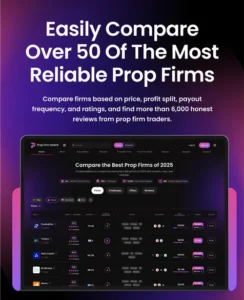
The goal of a service like “propfirmmatch” is to navigate this fragmented market. With so many firms offering varying levels of leverage, drawdowns, and profit-sharing models, traders need a centralized way to identify firms that align with their specific strategy, such as high-frequency trading or long-term trend following (Muller, 2001).
Why Traders Seek “Matching” Services
The evaluation landscape is complex. Modern firms use sophisticated metrics—such as the Sharpe Ratio and Sortino Ratio—to measure risk-adjusted returns rather than just pure profit (Lokier, 2025). A matching service helps traders find firms that prioritize these metrics, allowing them to:
1. Filter by Evaluation Type: Some firms require a simple profit target, while others utilize multi-step evaluations designed to mimic the rigor of hedge funds (Lokier, 2025).
2. Assess Risk Rules: Traders search for firms that offer specific drawdown limits (e.g., trailing vs. static drawdowns) that suit their personal risk appetite.
3. Evaluate Payout Reliability: A primary concern for traders is finding reputable firms that handle profit withdrawals transparently.
4. Compare Profit Splits: The percentage of profits shared with the trader is a key variable that these comparison platforms help to normalize.
The Evolution of Trader Selection
The industry is moving toward a model where firms act more like portfolio managers than simple gatekeepers (Lokier, 2025). By treating each trader as a distinct “strategy” within a larger portfolio, firms diversify their own risk. Consequently, traders are no longer just looking for “any” firm; they are looking for firms that will scale their capital as they demonstrate consistent, risk-managed performance over time (Lokier, 2025).
Risk and Due Diligence
When using a platform like “propfirmmatch,” it is essential to perform your own due diligence. Because the prop firm industry is largely decentralized, the “matching” results may be influenced by affiliate relationships or marketing agreements. Always verify:
1. Trading Rules: Ensure the platform clearly explains the specific constraints (e.g., news trading restrictions or position sizing).
2. Platform Reputation: Look for independent community feedback and regulatory history where applicable.
3. Capital Structure: Understand whether you are truly trading the firm’s capital or if the firm is utilizing a simulated environment to manage its own liability.
The Mechanism of Prop Firm Evaluations: A Deeper Look
To understand how these firms evaluate potential traders, one must look at the transition from traditional “desk” proprietary trading to the modern, digital-first model. In a traditional setting, prop firms functioned as elite hubs where traders were hired based on track records or rigorous testing within the firm’s infrastructure (Muller, 2001). Today, “evaluation” processes serve as a scalable filter for these firms, often mirroring the risk management constraints of institutional desks (Muller, 2001).
These evaluations typically test a trader’s ability to operate within:
1. Drawdown Limits: Most firms enforce strict daily and maximum trailing drawdown limits to ensure that even “funded” traders do not expose the firm’s capital to systemic risk (Muller, 2001).
2. Consistency Rules: Some firms analyze performance to ensure that profits are not the result of a “lucky” high-risk trade but rather a systematic, repeatable process (Muller, 2001).
3. Risk-Adjusted Metrics: Increasingly, firms utilize the Sharpe Ratio to compare prospective traders. A higher Sharpe Ratio indicates that a trader is achieving returns with lower volatility, which is a preferred trait for firms looking for long-term consistency (Muller, 2001).
Understanding the Market Role of Prop Traders
Proprietary traders, whether working for large institutional banks or independent firms, play a specific, constructive role in financial markets. Empirical evidence suggests that proprietary traders often act as liquidity providers . Unlike momentum traders who may buy after price rises and sell after price drops, proprietary traders often employ contrarian strategies—buying when price pressure is downward and selling during upward pressure . By “soaking up” these shocks, they contribute to the overall stability of the market, particularly during periods of high volatility .
Strategic Considerations for Traders
When choosing a firm or preparing for an evaluation, traders should consider the “incentive alignment” of the firm. Traditional research into trading incentives highlights that the most effective trading environments are those where the trader has “skin in the game” (Muller, 2001). However, in the retail prop firm sector, the “skin” is often the fee paid for the evaluation. To maximize success, traders should prioritize:
1. Alignment with Strategy: If you are a high-frequency trader, look for firms with low latency and favorable commission structures. If you are a long-term swing trader, focus on firms that allow holding positions over weekends or during major news events.
2. Risk Management Frameworks: Utilize tools to track your Value-at-Risk (VaR) and peak-to-trough drawdowns, even if the firm’s platform does not provide them natively (Muller, 2001).
3. Cost-Benefit Analysis: Understand that the profitability of these firms relies on a business model where only a fraction of participants pass the initial evaluation. Your preparation should focus on deep strategy refinement rather than breadth of market exposure (Muller, 2001).
Future Outlook and Regulatory Context
The industry is currently in a state of evolution. As regulation—such as the Volcker Rule—pushed traditional proprietary trading out of large banking entities and into less-regulated spaces, the landscape has become increasingly fragmented (Whitehead, n.d.). While retail trading has seen a surge in participation, there are ongoing debates regarding the “gamification” of trading and the potential conflicts of interest when retail order flow is internalized (Hoffmann & Jank, 2024). Traders should stay informed about these regulatory shifts, as they directly impact the long-term viability and operational rules of the firms they partner with.
Conclusion:-
The emergence of “propfirmmatch” services marks a pivotal shift in the democratization of capital markets. By providing a centralized, comparative framework, these platforms allow retail traders to navigate the dense, often opaque, world of proprietary trading firms. However, as the industry matures, the value for the trader lies not just in finding a firm, but in identifying partners whose evaluation structures, risk management mandates, and payout models align with their long-term professional objectives.
As highlighted throughout this analysis, the transition from independent retail trading to institutional-style proprietary trading requires more than just technical aptitude; it demands a disciplined adherence to risk protocols and a deep understanding of the firm’s specific metrics for success. Whether a firm utilizes trailing drawdowns, consistency rules, or volatility-adjusted performance targets, the trader’s ability to maintain a positive expectancy while operating within these constraints is the ultimate determinant of career longevity in this sector.
Looking ahead, the industry is likely to face increased scrutiny regarding market integrity and the structure of retail incentives. As firms evolve to mirror the complexity of hedge fund environments, traders must remain vigilant, treating their professional relationship with a prop firm with the same level of due diligence they would apply to any institutional partnership. Success in this field is not merely about gaining access to capital; it is about the sustainable, risk-managed execution of a strategy that provides consistent value in the global marketplace. By utilizing comparative tools, performing rigorous self-assessment, and prioritizing risk management, traders can effectively leverage the modern prop firm model to scale their potential and build a resilient trading career.
10 Key Benefits of Using Prop Firm Matching Services
Based on the analysis of the modern proprietary trading landscape, here are ten core benefits of utilizing a “propfirmmatch” service:
1. Centralized Efficiency: Eliminates the need for manual, time-consuming research by aggregating hundreds of firms into a single, searchable interface.
2. Strategic Alignment: Allows traders to filter firms specifically by their unique trading style, such as scalping, swing trading, or news-event-based strategies.
3. Risk Management Clarity: Provides a clear breakdown of complex drawdown rules (e.g., static vs. trailing), helping traders select firms that match their risk tolerance.
4. Metric-Based Comparison: Enables traders to compare firms based on professional standards like payout speed, profit split percentages, and scaling opportunities.
5. Reduced Barrier to Entry: Simplifies the discovery process for new traders looking to access institutional capital without having to pass traditional, opaque firm-hiring processes.
6. Informed Decision Making: Helps mitigate the risk of signing up with unreliable entities by centralizing community feedback and reputation metrics.
7. Customizable Filter Tools: Offers granular control to set preferences for account sizes, evaluation costs, and platform compatibility (e.g., MetaTrader, cTrader, or proprietary platforms).
8. Professional Growth Tracking: Assists in finding firms that offer consistent, multi-stage scaling plans, rewarding traders for long-term sustainable growth rather than one-time high-risk wins.
9. Regulatory Awareness: Provides a curated environment where users can better understand the jurisdictional and operational differences between various prop firm models.
10. Economic Optimization: Helps traders identify the most cost-effective evaluation programs, ensuring that the initial capital commitment aligns with their projected returns and career goals.
Short Description :-
In today’s rapidly evolving financial landscape, the rise of proprietary trading firms has provided retail traders with unprecedented access to institutional capital. However, the sheer volume of available firms, each with distinct evaluation processes, risk parameters, and profit-sharing models, creates a significant challenge for traders seeking the right partnership. This article explores the emergence of “propfirmmatch” services—centralized, comparative platforms designed to bridge this gap.
By leveraging these matching services, traders can efficiently filter firms based on specific criteria such as drawdown limits, evaluation structure, and payout reliability. Beyond simple aggregation, these platforms serve as a crucial tool for professional development, encouraging traders to align their unique strategies with firms that foster sustainable, risk-managed growth. The article examines the transition of the prop industry from exclusive banking desks to accessible digital ecosystems, emphasizing the importance of due diligence in a fragmented market. Whether you are a novice looking to demonstrate your skill or a seasoned pro seeking to scale your capital, understanding how to navigate these matching services is essential for long-term career success. By prioritizing strategic alignment and rigorous risk management, traders can effectively leverage the modern prop firm model to build a resilient and profitable trading career.
Meta Description :-
“Looking for the right prop firm? Use Propfirmmatch to compare top proprietary trading firms based on your unique strategy, risk tolerance, and profit-sharing goals.” “Discover the power of Propfirmmatch. Easily filter, evaluate, and match with the best proprietary trading firms to help you scale your trading career today.” “Confused by the hundreds of prop firms available? Simplify your search with Propfirmmatch—the essential tool to find, compare, and join the perfect trading partner.”